
Dating again after a long relationship is often described as frightening, complicated and emotionally exhausting…
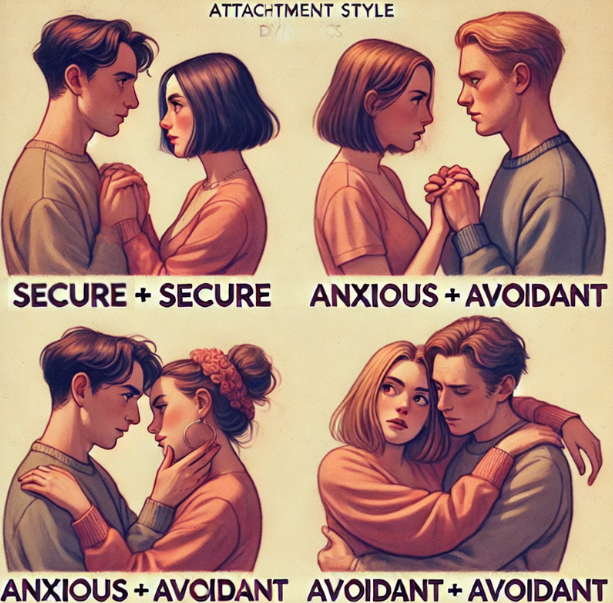
How Different Attachment Styles Interact in Relationships
Introduction
Relationships are a dance between two people, but when different attachment styles come together, they can create harmony, or friction. Understanding how your attachment style interacts with your partner’s can help you navigate challenges and build a healthier connection.
In this post, we’ll explore how each attachment pairing functions, where tensions may arise, and how to create balance in relationships.
Secure Attachment in Relationships
Secure attachment pairs well with most styles because these individuals:
✔ Feel comfortable with emotional closeness and independence.
✔ Communicate openly and resolve conflicts in a healthy way.
✔ Provide stability to anxious or avoidant partners.
Best match: Secure + Secure → Creates a stable, trusting relationship.
⚠ Challenges: Secure partners may feel frustrated when paired with highly avoidant or anxious individuals.
Anxious + Avoidant: The Most Common Relationship Trap
This is one of the most difficult pairings because:
❌ The anxious partner craves closeness, while the avoidant partner fears it.
❌ One partner may feel neglected, while the other feels smothered.
❌ The anxious partner over-pursues, triggering the avoidant partner to withdraw.
How to make it work:
-
The anxious partner should practice self-soothing instead of relying on reassurance.
-
The avoidant partner should work on emotional openness instead of shutting down.
Anxious + Anxious: A Cycle of Reassurance-Seeking
When two anxious partners come together, their relationship can feel intense but unstable:
Lots of passion and closeness.
⚠ But also high anxiety, insecurity, and emotional ups and downs.
Both partners may overthink small issues and require constant reassurance.
How to make it work:
-
Encourage independent self-worth instead of seeking validation from each other.
-
Develop healthy communication habits to ease fears of abandonment.
Avoidant + Avoidant: A Relationship of Distance
Two avoidant partners can struggle with intimacy:
Both value independence over emotional connection.
Communication may feel surface-level or detached.
Conflict is often avoided rather than resolved.
How to make it work:
-
Make emotional vulnerability a priority, small steps toward deeper connection.
-
Recognise that commitment doesn’t equal loss of freedom.
Fearful-Avoidant: A Push-Pull Dynamic
A fearful-avoidant (disorganised) partner may switch between anxious and avoidant behaviours:
They crave intimacy but fear rejection.
⚠ They might get close, then withdraw suddenly.
This inconsistency can create confusion and emotional exhaustion in relationships.
How to make it work:
-
Identify and heal past relationship wounds.
-
Seek therapy or self-awareness practices to break the cycle.
How to Create a Healthier Relationship, No Matter Your Attachment Style
Secure attachment is the goal. You can develop secure traits over time, even if you didn’t start with them.
Open communication is key. Express your needs in a healthy, non-reactive way.
Patterns can change. With self-awareness and effort, you can shift from anxious or avoidant to a more balanced attachment style.
Summary
Every attachment style has strengths and challenges, but understanding these dynamics can lead to healthier, more fulfilling relationships. The key is self-awareness, communication, and a willingness to grow.
Key Takeaways
-
Secure attachment creates the healthiest relationships, but growth is possible for everyone.
-
Anxious + avoidant is the most challenging pairing but can work with effort.
-
Open communication and emotional vulnerability help improve relationship dynamics.
FAQs
1. Can an avoidant and anxious person have a successful relationship?
Yes, but it requires both partners to understand their triggers and work on emotional balance.
2. What if my partner doesn’t want to discuss attachment styles?
Lead by example, focus on improving your own attachment security and observe how it impacts the relationship.
3. Can therapy help improve attachment styles?
Absolutely! Therapy can help unpack past wounds and build healthier relationship patterns.

Related Posts

Comments (0)